
Ever get stuck when trying to make a decision? Maybe you’re choosing what to eat, what to buy, or which path to take at work, and suddenly, you feel overwhelmed and can’t decide at all. If that sounds familiar, you might be suffering from Analysis Paralysis.
You might think you’re just being diligent and weighing all your options carefully. But chances are, you’re actually overthinking.
It’s more common than you’d expect. I’ve even seen many smart, capable people deal with it – often alongside Imposter Syndrome. They had tons of potential but ended up draining their energy by overanalyzing every little thing.
If this sounds like you (or someone close to you), don’t worry, there are ways to deal with it. Below are five practical methods to help you break free from the mental gridlock.
What Is Analysis Paralysis?
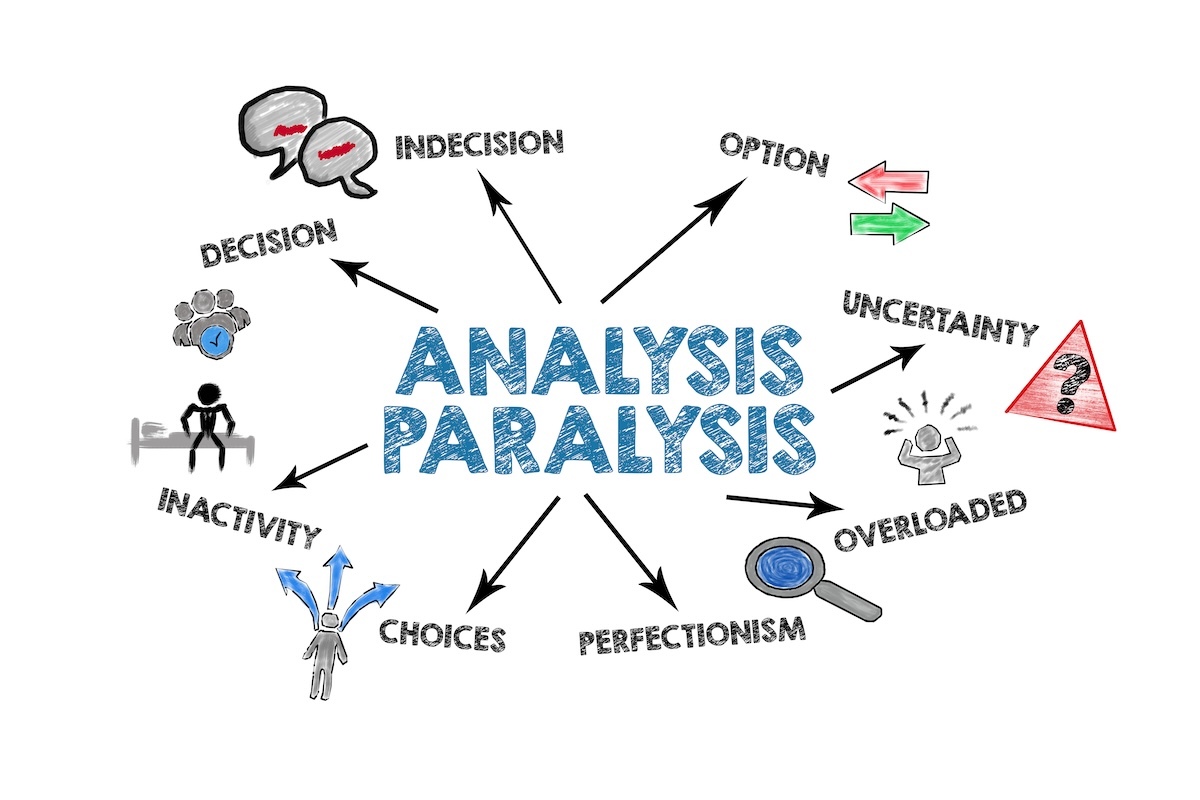
Analysis paralysis occurs when overthinking prevents you from making a decision. Instead of taking action, you get stuck in a cycle of weighing options, researching information, and fearing mistakes.
Now, thinking critically is good. It’s smart to consider your options. But when it goes too far, it turns into Analysis Paralysis. Here are the signs you might want to look out for:
- Difficulty making even small choices, such as deciding what to eat or watch
- Endless research without taking action
- Fear of making the wrong decision, leading to hesitation
- Overthinking simple matters and going over the same options without progress
- Feeling mentally exhausted by decisions
- Regretting past decisions or doubting current ones
What Causes Analysis Paralysis?
From personal experience and watching people around me, here are some common reasons Analysis Paralysis can happen. See if any of these resonate with you:
| Cause | Explanation |
| Paradox of Choice (too many choices) | When there are too many options, the brain struggles to compare them all, making decision-making harder. |
| Loss Aversion (fear of making the wrong decision) | People hesitate because they fear failure or regret. Loss aversion makes people fear losses more than they value gains. |
| Hick’s Law (too much information at once) | The brain can only process a limited amount of information at once. Too much data leads to overwhelm and avoidance. |
| Perfectionism (maximizing vs. satisficing) | Some people try to find the absolute best option instead of choosing something that is simply good enough. |
| Self-Doubt (lack of confidence in decision-making) | People who doubt their ability to make the right choice often postpone decisions. |
Unfortunately, this leads to:
- Decision Fatigue
- Increased Stress and Anxiety
- Missed Opportunities
- Regret and Dissatisfaction
How It Shows Up in Everyday Life
The effects of Analysis Paralysis can extend to almost any area of life. Here are a few examples:
| Areas of Life | Examples |
| Business and Work | Delaying a product launch, struggling to accept a job offer, or hesitating to select and implement a strategy |
| Personal Life | Feeling overwhelmed because of all the options when trying to decide what to buy, what to wear, or where to eat |
| Education and Career | Struggling to choose a major or constantly revising your resume instead of applying |
| Entertainment and Shopping | Spending excessive time browsing Netflix, online stores, or restaurant menus without making a final choice |
| Health and Fitness | Struggling to pick a workout plan or diet due to overwhelming options |
| Technology and Gadgets | Spending hours researching smartphones, laptops, or apps without making a purchase |
| Finance and Investments | Hesitating to invest in stocks or savings due to fear of making a bad financial decision |
| Relationships | Overanalyzing interactions, texts, or potential partners instead of making a move |
| Travel and Vacations | Spending weeks planning a trip but never booking flights or accommodations |
| Hobbies and Leisure | Struggling to pick a new hobby or creative project due to too many choices |

5 Ways to Overcome Analysis Paralysis
The philosopher Epictetus once said, “The more we value things outside our control, the less control we have.” When we overthink, we often imagine problems that haven’t even happened yet. That’s wasted energy.
Here are five ways you can regain control when you encounter Analysis Paralysis:
1. Set Time Limits for Decisions
Without a time limit, decisions can stretch out forever. Parkinson’s Law states that work tends to expand to fill the time available for its completion. So, give them less time!
Try timeboxing, a technique where you allocate a fixed time to make a choice and stick to it. You can also try The 5-Second Rule by Mel Robbins. If you catch yourself hesitating, count down from five and take action immediately.
2. Reduce Your Choices
Too many choices lead to stress, regret, and endless second-guessing. The Paradox of Choice tells us that more choices usually don’t make us happier.
Try using the Rule of Three: narrow your options to just three. When you limit your choices, comparisons become easier, and decisions happen faster.
3. Go for “Good Enough” Over Perfection
Trying to make the perfect choice often leads to no choice at all. Instead, go for “good enough.” This is called satisficing — picking something that meets your needs instead of chasing perfection.
The 80/20 Rule (also known as the Pareto Principle) reinforces this idea: 80% of your results often come from just 20% of your effort. Don’t waste time on marginal improvements when you could move forward instead.
4. Take Small, Low-Risk Actions
Most decisions aren’t final. Many can be changed or reversed later. So don’t be afraid to make a move.
Jeff Bezos’ Reversible vs Irreversible Decision Framework suggests that if a decision can be undone, make it quickly and move on. The OODA Loop — Observe, Orient, Decide, Act –encourages making quick, informed decisions while staying flexible enough to adapt if needed.
5. Trust Yourself & Move Forward (Action Bias & Regret Minimization Framework)
Sometimes, doing something is better than doing nothing. Action Bias explains why taking a step forward often feels more satisfying than staying stuck in indecision. Jeff Bezos’ Regret Minimization Framework can help. Ask yourself, “If I don’t do this, will I regret it in 10 years?” If the answer is yes, take the leap!
Final Thoughts
Overcoming Analysis Paralysis isn’t something that happens overnight. And even if you get better at managing it, it may still pop up now and then just like Imposter Syndrome. That’s okay.
What matters is that you keep moving forward!
If you liked this article, consider signing up for our free weekly newsletter. We share helpful tools, tips, and curated content from around the web. No spam, no catch — just good stuff.